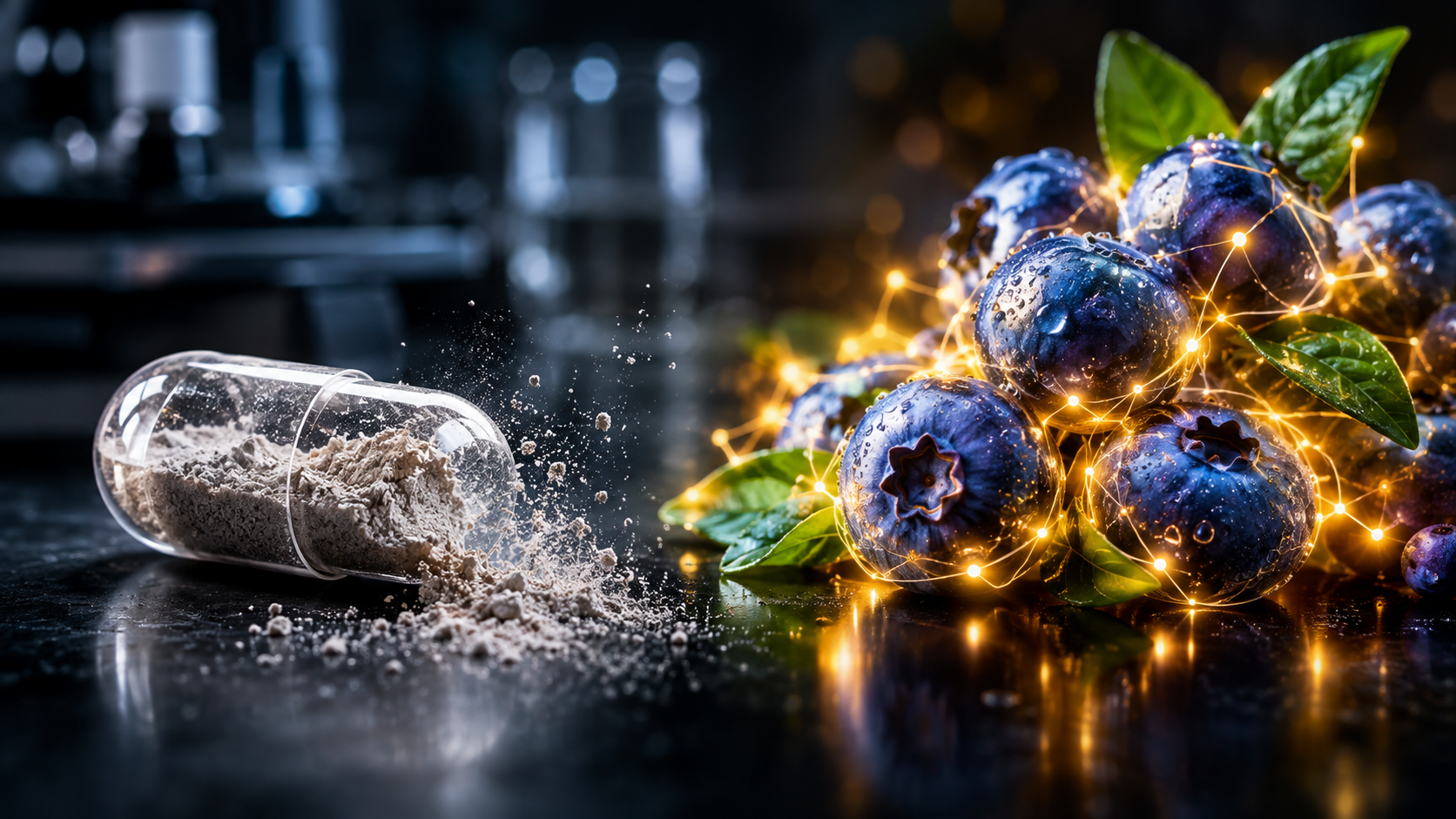
The Billion-Dollar Wellness Blind Spot
The wellness industry has a billion-dollar blind spot, and you might be paying for it. Consumers are aggressively chasing dietary polyphenols—plant compounds marketed as powerful antioxidants capable of preventing aging, diabetes, and cancer.
The financial scale of this pursuit is real, if the exact number depends on who’s counting. Market-research estimates for the global polyphenols market in 2025 range from roughly $1.3 billion to $2.8 billion depending on the firm and methodology used; one widely cited figure, from Grand View Research, projects growth from a 2025 baseline to $3.6 billion by 2033 at a 7.2% CAGR [1]. This growth is driven by an aging population and increased awareness of preventive healthcare.
The Big Three Ingredients: Grape seed products hold roughly 44% of market share in 2025, driven by demand for cholesterol management and cancer prevention [1]. Green tea and antioxidant-rich cocoa and coffee beans follow closely behind as top segments for health-conscious consumers.
How We Consume Them: Functional foods hold the largest application share (around 35%), targeting improved gut health and reduced intestinal inflammation [1]. Functional beverages serve as the second-largest segment, driven by demand for stimulated, on-the-go wellness drinks.
Global Demand: The Asia Pacific region leads the market with roughly 46–47% of revenue share [1]. This is mainly due to strong government support in China for health foods and traditional medicine. North America and Europe, especially Germany and the UK, are also growing quickly, driven by increasing demand for clean-label dietary supplements and scientifically backed nutraceuticals.
The “Petri Dish” Trap: Why We Got It Wrong
Laboratory studies involve the application of concentrated polyphenols directly to isolated cells in test tubes or petri dishes. This results in a miracle effect, destroying cancer cells, reducing inflammation, and slowing cellular aging.
However, a human body operates in a complex manner, where these compounds encounter physiological barriers that alter their function.
1. The Low Bioavailability Barrier: Our body does not absorb the polyphenols found in foods such as blueberries, green tea, or turmeric in their raw or intact form. Polyphenols generally have poor water solubility and low bioavailability.
- Gut Degradation: Our stomach is acidic and the small intestine has digestive enzymes, which can easily degrade polyphenols.
- Microbiome Metabolism: What remains is then heavily metabolized by your gut microbiota, transforming the original “miracle” compounds into entirely different chemical byproducts.
2. The Liver’s Filtering System: Now, after the gut barrier, if any pass into the liver through the portal vein, it quickly detoxifies them through a process called first-pass metabolism. It attaches molecules such as sulfates, glucuronides, or methyl groups to the polyphenols, making them easier to excrete in urine. As a result, the raw, un-metabolized polyphenols that you might see in a test tube rarely circulate in human blood.
3. The Concentration Illusion: The most significant issue lies in the dosage calculations.
In vitro studies, typically at concentrations ranging from 10 to 100 micromoles per litre (10–100 µM), work well.
In vivo studies show that even with high dietary polyphenol intake, plasma metabolite concentrations rarely exceed 1 micromole per liter (1 µM) [2].
Extrapolating clinical anti-aging outcomes from isolated cell cultures is not just optimistic; it is pharmacokinetically flawed. That said, this doesn’t mean high-dose supplementation is automatically pointless — a number of clinical trials using sustained high doses (500–1,000 mg/day for 4–12 weeks) of quercetin or resveratrol have shown measurable clinical effects in conditions like rheumatoid arthritis and ulcerative colitis [2]. The results are inconsistent and dose- and duration-dependent, not simply absent — the honest takeaway is “unpredictable and hard to dose for,” not “does nothing.”
The Colon Plot Twist: Enter Your “Metabotype”
If raw parent polyphenols do not circulate in significant amounts, why do polyphenol-rich diets correlate with lower cardiometabolic disease risks?
Dietary polyphenols are not direct-acting agents; instead, they serve as substrates for the gut microbiome.
Since the upper gastrointestinal tract cannot absorb large polyphenolic structures, a substantial majority of these molecules — commonly cited at over 90% for compounds like anthocyanins and proanthocyanidins — reach the large intestine intact [3]. It’s worth noting this figure varies meaningfully by polyphenol class: isoflavones and flavan-3-ols (found in soy, cocoa, and green tea) are absorbed considerably more efficiently in the upper gut than that [2], so “>90% reaches the colon” is a reasonable average rather than a universal rule. There, dense colonies of anaerobic bacteria act as a biological bioreactor. Microbial enzymes cleave glycosidic bonds, break open aromatic rings, and perform dihydroxylation, transforming unwieldy parent compounds into small, low-molecular-weight metabolites:
These microbial byproducts—recognized as postbiotics—possess superior bioaccessibility, circulate systemically, and modulate gene expression, mitochondrial mitophagy, and inflammation.

The Biological Lottery
This mechanism introduces an essential variable that standard supplement labels ignore: your metabotype.

Because every human possesses an individualized microbiome composition, our metabolic capacities vary drastically. You do not experience the physiological effects of what you swallow; you experience the physiological effects of what your resident microbes can biotransform.
The Urolithin A Divide: Ellagitannins (abundant in pomegranates, walnuts, and raspberries) must be converted into urolithins by specific colonic bacteria (notably members of the Eggerthellaceae family, such as Gordonibacter) [4]. Clinical observations reveal that the human population stratifies into distinct metabotypes:
- Metabotype A: Efficient producers of Urolithin A (associated with enhanced mitochondrial biogenesis and muscle endurance).
- Metabotype B: Producers of Urolithin B and isourolithin A.
- Metabotype 0: Non-producers whose microbiomes completely lack the bacterial machinery required to make this conversion. For these individuals, pomegranate extract yields virtually zero downstream urolithins. [4]
The Equol Disconnect: A similar divergence occurs with soy isoflavones. Daidzein can be biotransformed into equol (a metabolite with significant estrogen-receptor-binding affinity and cardiovascular utility). Published estimates for equol producers in Western populations vary by study — commonly cited figures range from about 25% up to 50%, with 30–50% being a reasonably representative midpoint — while the remaining majority receive virtually no equol-driven endocrine benefits [5].
The scientific community is now designing trials around this exact phenomenon. The ongoing META-BETA trial (NCT06888167), for example, directly stratifies participants by their polyphenol metabotypes to quantify how divergent microbial conversion rates alter pancreatic beta-cell function and insulin sensitivity [6]. Nutrition research has officially moved past the assumption that one pill creates one universal physiological outcome. Separately, urolithin A itself is now the subject of major standalone clinical research as a branded postbiotic ingredient — a 2025 randomized, placebo-controlled trial found four weeks of supplementation improved markers of age-related immune decline [7].
The Food Matrix: Why Nature Engineered Packages, Not Powders
The reality of metabotypes reveals why the modern trend of isolating polyphenols into high-dose capsules often fails to reproduce whole-food effects. When you extract a single polyphenol from a plant, you strip away its delivery vehicle: the food matrix.

The Whole Food Matrix: When polyphenols are bound to natural prebiotic fibers, they are shielded from early digestive breakdown and safely delivered to your colonic microbiome for efficient biotransformation.
1. Structural Fiber as a Biological Escort
In whole foods like wild blueberries and apples, polyphenols are bound to plant cell walls (pectin and cellulose). This fiber matrix acts as a natural enteric coat. It shields fragile phenolic compounds from early degradation in stomach acid, safely carrying them down to the colon where your bacterial converters reside. Swallowed in free-form capsules without fiber, isolated extracts face rapid gastric breakdown and largely bypass the lower bowel.
2. Prebiotic Fuel for the Bacterial Factory
Microbial biotransformation is an energy-intensive process. Whole plant foods deliver both the raw building blocks (polyphenols) and the necessary fuel (prebiotic fiber). As gut microbes ferment this fiber into short-chain fatty acids (SCFAs), they create an ideal environment for the specific bacteria that perform polyphenol cleaving. An isolated capsule provides the raw material but starves the workforce needed to process it.
3. Food Synergy Over Chemical Isolation
Landmark investigations at Cornell University demonstrated that the total antioxidant activity of 100 grams of fresh apple was equivalent to roughly 1,500 mg of isolated Vitamin C [8]. Yet, the apple contained merely 5.7 mg of actual ascorbic acid [8]. The profound cellular defense did not stem from a single megadose; it was driven by the synergistic interaction of multiple compounds working within an intact cellular matrix. Nutritional researchers formalize this as “Food Synergy” [9]: the health effect of a whole food is not reproducible through the simple sum of its isolated chemical parts.
Re-Engineering Your Polyphenol Protocol
If you want the systemic benefits of polyphenols without wasting money on bio-inaccessible powders, build your regimen around colonic biology rather than supplement marketing:
- Rethink Megadose Monotherapies: Be skeptical of massive-dose, single-compound capsules like resveratrol or quercetin. Plain oral uptake is genuinely poor. While not completely useless, clinical benefits only appear inconsistently at high, sustained doses unless the supplement uses advanced delivery systems (like lipid-based phytosomes).
- Cultivate Your Microbial Factory: You cannot benefit from postbiotics without metabolic diversity in your gut. Data from the American Gut Project shows that eating 30 or more distinct plant foods a week significantly increases microbiome diversity compared to eating 10 or fewer [10]. Building broad plant diversity into your diet is the most reliable strategy to support your unique metabotype.
- Prioritize Native, Unrefined Matrices: Source your polyphenols from whole berries, extra-virgin olive oil, unsweetened cacao, walnuts, and green tea. These foods deliver phenolic diversity alongside the essential fiber and lipids required to safely shuttle the compounds past your stomach acid.
- Target Verified Postbiotics When Necessary: If you want a specific clinical outcome—such as enhanced mitochondrial clearance via Urolithin A—but suspect you lack the necessary gut bacteria, bypass the biological lottery. Look for direct postbiotic supplements that provide the finished microbial metabolite rather than just the raw precursor.
True cellular health is not built on flooding your bloodstream with unabsorbed molecules; it is built on honoring the partnership between the foods you eat and the microbes that translate them into medicine. That said, “myth” may be a bit strong for where the science actually lands: dietary polyphenols’ benefits are real and well-documented at the population level—what’s genuinely uncertain is how they work and who benefits most, which is exactly the personalized, metabotype-driven question researchers are now racing to answer.
FAQs About Antioxidant Supplements
Most isolated polyphenol supplements have very low bioavailability. Because they are extracted from their natural plant fiber, they are rapidly broken down by stomach acid and filtered out by the liver before they can reach the colon to provide cellular benefits.
Yes. Nutritional research demonstrates “food synergy,” where compounds work together within a cellular matrix. For example, clinical studies show that 100 grams of fresh apple provides the antioxidant equivalent of 1,500 mg of isolated Vitamin C, despite containing very little actual ascorbic acid.
In whole foods, structural plant fibers like pectin and cellulose act as a natural protective coating. They safely escort fragile polyphenols through harsh stomach acid down into the lower gut, while simultaneously feeding the specific bacteria needed to biotransform them into usable health compounds.
A metabotype is your unique metabolic profile driven by your specific gut bacteria. It determines whether your body possesses the correct microbial “machinery” to actually absorb and utilize the polyphenols you consume from plants or supplements.
References
- Grand View Research (2026). Polyphenols Market Size, Share & Trends Analysis Report, 2026–2033.
- Bertelli, A., et al. (2021). Polyphenols: From Theory to Practice. Foods, 10(11), 2595.
- Kamiloglu, S., et al. (2020). Effect of food matrix on the content and bioavailability of flavonoids. Trends in Food Science & Technology.
- Iglesias-Aguirre, C. E., et al. (2023). Gut Bacteria Involved in Ellagic Acid Metabolism To Yield Human Urolithin Metabotypes. Journal of Agricultural and Food Chemistry.
- Shor, D., et al. (2012). Does equol production determine soy endocrine effects? European Journal of Nutrition.
- ClinicalTrials.gov. Food (poly)phenol Metabotypes and Beta-cell Mass and Function (META-BETA trial). Identifier: NCT06888167.
- Nature Aging (2025). Randomized, placebo-controlled trial of Urolithin A on age-related immune decline.
- Eberhardt, M. V., et al. (2000). Antioxidant activity of fresh apples. Nature, 405, 903–904.
- Jacobs, D. R., et al. (2009). Food synergy: an operational concept for understanding nutrition. American Journal of Clinical Nutrition.
- McDonald, D., et al. (2018). American Gut: an Open Platform for Citizen Science Microbiome Research. mSystems.
This article reflects analysis of the sources above and is intended for general information, not personalized medical or nutritional advice.
Leave a Reply