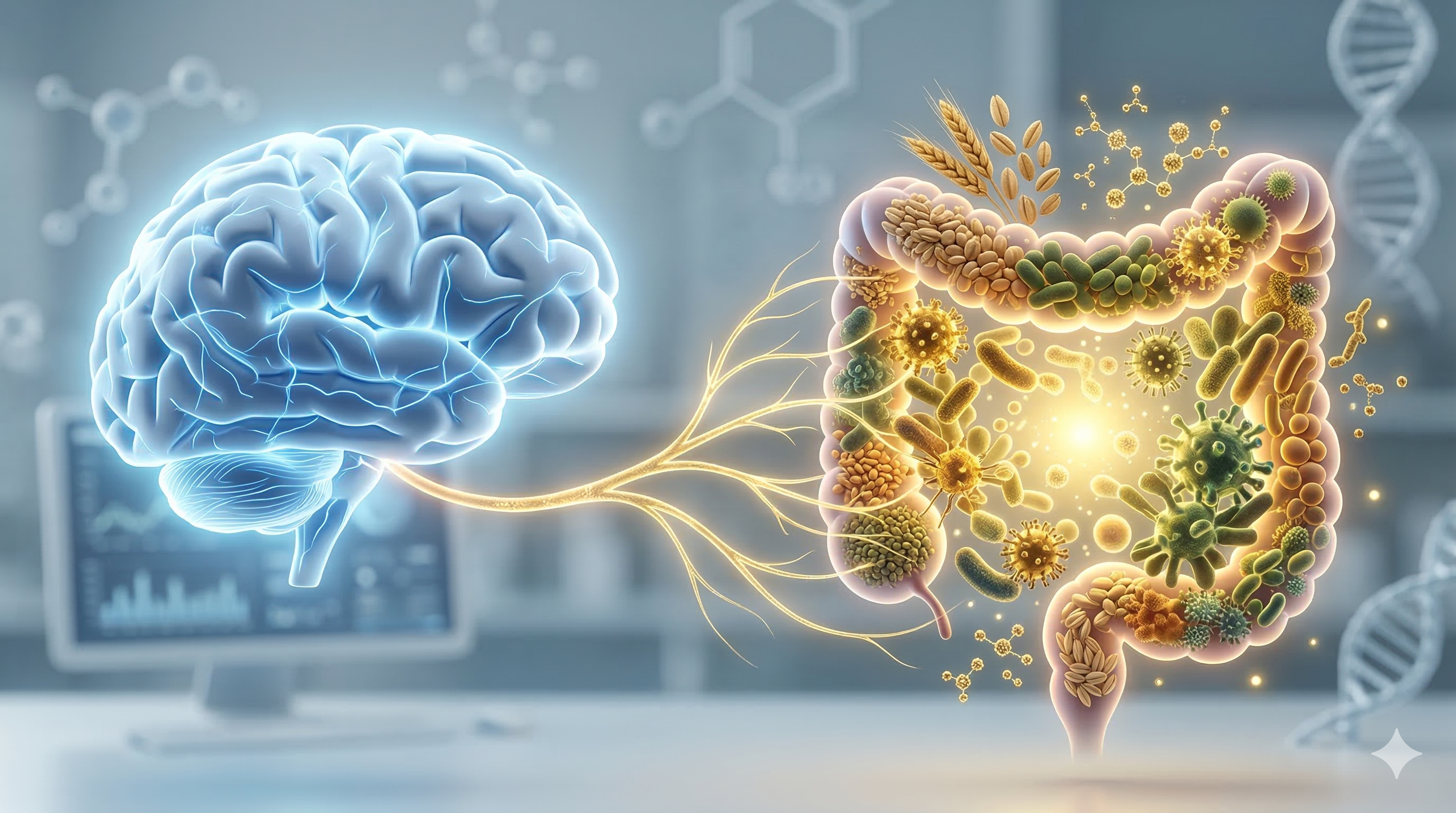
Imagine your gut as a flourishing, lush garden. In a healthy garden, you have a diverse mix of flowers, shrubs, and trees — the beneficial bacteria — coexisting peacefully. They protect the soil, stop weeds from taking over, and help everything grow.
But what happens if you stop watering the plants? Or if a storm — like a round of antibiotics — wipes out the flowerbeds? The weeds, the harmful bacteria, start to take over.
This state of imbalance is what scientists refer to as Gut Dysbiosis. It sounds complicated, but it simply means that your body’s internal ecosystem is out of balance. And as we are learning, when your gut garden is unhealthy, the rest of your body — from your skin to your brain — pays the price.
This piece serves as the foundation for my broader series exploring gut health, fructose metabolism, inflammation, and the microbiota-gut-brain axis (MGBA). If you arrived here from The Fructose Paradox or my article on the gut-brain connection, many of the concepts explored there begin here.r below.
What Exactly is Dysbiosis?
Your gut microbiome consists of trillions of microorganisms. In a healthy state (homeostasis), the “good” guys keep the “bad” guys in check. Dysbiosis occurs when this balance is disrupted in one of three ways:
Loss of Diversity: You simply don’t have enough varieties of beneficial bacteria — the garden has too few species.
Loss of Beneficial Bacteria: The specific “protector” strains go missing — the gardeners have left.
Overgrowth of Pathogens: Harmful bacteria or yeasts grow out of control — the weeds have taken over entirely.
The “Science Corner”: What’s Happening at the Cellular Level?
For the Science Geeks: For those who want to go deeper, here is what this imbalance actually looks like under the surface.
Dysbiosis often involves shifts in major bacterial populations, including changes in the balance of dominant bacterial groups such as Firmicutes and Bacteroidetes. These shifts may alter how the gut interacts with the immune system and processes nutrients.
Researchers have also observed that dysbiosis can contribute to increased intestinal permeability — commonly referred to as “leaky gut.” In this state, components from bacterial cell walls, such as lipopolysaccharides (LPS), may enter circulation and contribute to low-grade systemic inflammation.
This inflammatory signaling is one reason gut dysbiosis is increasingly being studied in connection with conditions extending far beyond the digestive tract.
The Culprits: What Causes the Imbalance?
By now you know that we aren’t born with dysbiosis — we usually acquire it through modern lifestyle factors:
Antibiotics (The Forest Fire): While lifesaving, antibiotics act like a forest fire, burning down both the harmful infection and your beneficial gut flora simultaneously. This is especially true for broad-spectrum antibiotics.
Real Life Example: To heal a minor infection from an ear or nose piercing, we often take strong oral antibiotics. That medication travels through your entire system, disrupting the beneficial ecosystem in your gut just to reach that one tiny spot.
The “Western” Diet: High sugar and processed foods feed harmful bacteria, while a lack of fiber starves the beneficial ones. Your packaged breakfast cereals, bottled juices, ketchup, and sauces are all packed with high amounts of sugar. Even the preservatives and emulsifiers used in processed foods and drinks are quietly detrimental to a balanced gut.
Chronic Stress: Your brain and gut are in constant communication through the Gut-Brain Axis. High stress signals your gut to slow digestion and alter bacterial composition — and a disrupted gut, in turn, worsens stress and anxiety. It is a cycle that runs in both directions.
Environmental Toxins: Pesticides and pollutants can significantly alter the microbiome’s composition over time, even at low exposure levels.
Preservatives: The “Invisible Antibiotics”: This is one of the most overlooked culprits — and one I stumbled upon through an unexpected experiment at home.
🍊 The Fruit Fly Test
Recently, I conducted an accidental experiment. I left a glass of packaged orange drink next to a freshly peeled orange on my kitchen counter. To my surprise, fruit flies swarmed the real fruit and completely ignored the sugary packaged drink.
Why? Because the real fruit was alive and fermenting — signalling “food” to nature. The packaged drink was biologically dead, loaded with preservatives like Sodium Benzoate and Potassium Sorbate that no living organism wanted to touch.
Scientists are now investigating how some preservatives and food additives may influence gut microbial ecosystems over long periods of exposure. The evidence is still evolving, but it highlights an important idea: Foods designed for long shelf stability may not always support microbial diversity inside the human gut.nside the bottle.
Symptoms of Gut Dysbiosis
Although bloating is the most recognized sign, the symptoms of dysbiosis extend far beyond your digestive tract. Because your gut is connected to your whole body, the imbalance can appear almost anywhere:
Digestive Issues: Gas, bloating, diarrhea, or constipation
Brain Fog & Mood: Anxiety or difficulty concentrating, driven in part by disrupted serotonin production — roughly 95% of which is synthesized in the gut
Skin Flare-ups: Eczema, acne, or unexplained rashes
Immune System Struggles: Falling sick frequently, or developing new food sensitivities seemingly out of nowhere
How to restore Your Gut
The good news? Your microbiome is resilient. Like a garden that has been neglected, it can be restored with the right care and the right inputs. Here is a practical, culturally grounded approach:
Feed the Good Guys (Prebiotics) Think of fiber as fertilizer for your garden. The more diverse your fiber sources, the more diverse your bacterial community. Aim for variety — oats, bananas, garlic, onions, and methi (fenugreek) are all excellent prebiotic sources. Traditional Indian staples like raw banana sabzi, moong dal, and jowar roti are quietly among the best prebiotic foods available.
Introduce Reinforcements (Probiotics) Fermented foods deliver live beneficial bacteria directly into your gut. Yogurt, kefir, kimchi, and sauerkraut are well-known options — but traditional Indian fermented foods are equally powerful and far more accessible: idli, dhokla, kanji, homemade lassi, and fermented rice are all excellent daily sources that have supported gut health across generations.
Limit the “Weed Feed” Reduce refined sugars and ultra-processed foods that harmful bacteria thrive on. Packaged juices, sweetened beverages, and snacks with long ingredient lists are the primary weed feed in a modern diet. Pass the Fruit Fly Test before you buy.
Post-Antibiotic Care After a course of antibiotics, your garden needs active rebuilding. Follow antibiotic treatment with a dedicated protocol of probiotics and gut-healing foods — bone broth, fermented foods, and fiber-rich meals — to restore your bacterial diversity as quickly as possible.
Conclusion
Treating your gut like a garden requires patience. It won’t be restored overnight, but with the right nutritional fertilizer — diverse fibers, fermented foods, and a reduction in the chemicals that quietly clear-cut your ecosystem — you can crowd out the weeds and cultivate a microbiome that supports your physical and mental health.
The garden metaphor isn’t just a nice analogy. It is the most accurate way to think about what your gut needs: diversity, regular feeding, protection from disruptive forces, and time. Tend to it with that intention, and the rest of your body will feel the difference.
Want the Full Restoration Plan?
Understanding dysbiosis is step one. Fixing it is step two.
I have created a free, comprehensive PDF guide: “The 4-Week Gut Rewilding Protocol.” It includes:
✅ The “Symptom Tracker” Checklist: To know exactly which stage of dysbiosis you are in. ✅ The “Safe” Shopping List: Exactly which yogurts and foods pass the “Fruit Fly Test.” ✅ Post-Antibiotic Recovery Plan: A day-by-day guide to rebuilding your gut after medication.
Your Gut is Your Second Brain: The Science of the Microbiota-Gut-Brain Axis
What if the most powerful antidepressant in the world isn’t a pill — it’s a bowl of yogurt?
That question would have sounded absurd a decade ago. Today, it sits at the center of one of the most exciting frontiers in modern medicine. As a Biotech researcher, I can tell you that your gut — often called your “second brain” — has a massive, underappreciated say in how you feel emotionally.
For years, the idea that gut bacteria could influence mental health was considered fringe science. By 2026, the Microbiota-Gut-Brain Axis (MGBA) had firmly transitioned from emerging hypothesis to a primary pillar of mental health research and treatment. Let’s explore how your belly’s microbes are the key to mental resilience.
This piece connects closely to my works on gut dysbiosis and fructose’s impact on the gut lining — if you haven’t read those, they provide useful grounding for what follows.
What’s Living in Your Gut? The 95% Serotonin Rule
Inside your gut lives a bustling community of trillions of microorganisms — bacteria, viruses, and fungi. These aren’t just passengers; they are a chemical factory. They help produce essential vitamins, regulate your immune system, and synthesize serotonin — the “happy chemical.”
The Fact: Roughly 95% of your body’s serotonin is produced in the gut, not the brain.
An important nuance: Gut serotonin doesn’t cross the blood-brain barrier directly. Its influence on mood is more subtle, working through the vagus nerve and other signalling pathways rather than flowing straight to the brain. This is precisely what makes the gut-brain relationship so fascinating — and so complex.
The Problem: When this delicate balance is disturbed — a condition called gut dysbiosis — it creates a neurochemical ripple effect that reaches your mind and often manifests as anxiety or “brain fog.”
The Highway Between Your Gut and Brain: The Vagus Nerve
To understand the MGBA, you need to meet its primary infrastructure: the vagus nerve.
This long, wandering nerve is the physical highway of the underground messaging network — stretching from your brainstem all the way down to your gut, passing through your heart and lungs along the way. What makes it remarkable is the direction of traffic. Roughly 80% of the signals travelling along the vagus nerve move upward — from gut to brain, not the other way around. Your gut is quite literally talking to your brain far more than your brain talks to your gut.
This is not a one-way broadcast either. The MGBA is bidirectional — stress and anxiety from the brain also travel downward, disrupting gut bacteria and worsening dysbiosis. This creates a vicious cycle that is now well-documented in clinical research: a disrupted gut worsens mental health, and worsening mental health further disrupts the gut. Breaking this cycle requires addressing both ends of the network simultaneously.
The Science: Gut Imbalance and Depression
Can bad gut health cause depression or anxiety? The latest research suggests a direct and meaningful link — though it is worth noting that in humans, much of this evidence is still correlational rather than fully causal. The direction is clear; the precise mechanisms are still being mapped.
The Amygdala Switch (2025): Research from Duke-NUS Medical School identified indoles — metabolites produced by gut bacteria — that act as direct regulators of the brain’s amygdala, the region that controls our fear and anxiety responses. When gut bacteria are depleted, indole production drops, and the amygdala loses a key calming signal.
The Mouse Study: A landmark study in Nature Communications showed that transplanting gut bacteria from “depressed” mice into healthy mice caused the healthy mice to begin displaying signs of depressive behavior. While animal studies don’t always translate directly to humans, this finding established a powerful proof of concept and opened a productive line of human research that continues today.
The eCB Connection: Scientists discovered that an unhealthy gut disrupts the body’s endocannabinoid system (eCB) — the system responsible for regulating mood and neurogenesis (the birth of new brain cells) in the hippocampus. When the messaging network goes down, this regulatory system loses its balance.
Psychobiotics: A New Signal for the Network
This research has birthed an entirely new field: Psychobiotics — specific probiotic strains used to directly support mental health by restoring signal clarity in the gut-brain network.
The Human Proof (2025 Data): A randomized trial published in Brain Sciences followed adults across New Delhi, Kolkata, and Pune. Those taking a specific psychobiotic blend of L. rhamnosus and B. longum for 12 weeks saw a 7.4% improvement in sleep efficiency and significantly lower anxiety scores compared to the placebo group.
This study deserves particular attention. Most psychobiotic research emerges from Western university settings and tests interventions on populations with very different dietary baselines. This Indian trial matters because it tests these findings on populations with distinct gut microbiome compositions — shaped by traditional South Asian diets, spice exposure, and fermented food cultures — making its results directly relevant to millions of readers who rarely see their dietary context reflected in clinical research.
To restore a healthy messaging network, research now points to three key pillars:
Postbiotics: The beneficial byproducts produced when your bacteria digest fiber — most notably Butyrate, a short-chain fatty acid that crosses the blood-brain barrier and actively protects brain tissue.
Prebiotics: The fuel for your beneficial bacteria — found in bananas, garlic, onions, and oats.
Probiotics: Live beneficial bacteria themselves — found in yogurt, kimchi, and kefir.
Healing from the Inside: Your Action Plan
The good news? Your gut is remarkably flexible. You can begin shifting your microbiome meaningfully in as little as 24 hours by making these changes:
Adopt a Mediterranean-style diet: Rich in vegetables, whole grains, legumes, and healthy fats like olive oil. This dietary pattern has the strongest evidence base for both gut and mental health.
Diversify your fiber sources: Aim for 30 different plant foods per week to feed a wider range of beneficial bacterial strains. This doesn’t mean 30 separate meals — herbs, spices, and seeds all count.
Embrace fermented foods daily: Yogurt, kefir, kimchi, miso, and traditional Indian fermented foods like idli and dhokla all introduce beneficial live cultures into your gut. Even a small daily serving makes a measurable difference.
Choose mindful probiotics: For targeted mental health support, look specifically for strains like L. plantarum or B. longum, which have been clinically studied for stress and anxiety reduction.
What We Don’t Know Yet
The science is genuinely exciting — but intellectual honesty matters, especially on a topic as personal as mental health.
We do not yet have a standardized “mental health probiotic.” Individual microbiome variation is enormous, meaning the same intervention can produce meaningfully different results in different people. Most human trials in this field are still relatively short and small in scale. And while the correlation between gut dysbiosis and depression is strong and consistent, the precise causal mechanisms in humans are still being mapped.
What the research does tell us clearly is the direction — and that direction points firmly and consistently toward the gut. The network is real. The signals are real. And the tools to strengthen them are, remarkably, available in your kitchen right now.
Final Thoughts: It Starts in Your Gut
We can’t always control external stressors, but we can control the environment inside our bodies. Every meal is an opportunity to either strengthen or weaken your gut-brain messaging network. A diverse, fiber-rich, fermented-food-friendly diet doesn’t just feed your microbiome — it restores signal clarity, supports your amygdala, and builds the kind of mental resilience that no external circumstance can easily take away.
If you read blogs about how fructose affects your liver, gut health, and brain signals, you will see that these topics are connected. They tell one story. The decisions you make while eating influence everything, from your gut to your mind, in ways that science is just starting to understand.
Your mental resilience doesn’t start in your mind. It starts in your gut — and it starts at your next meal.
The post-antibiotic era isn’t a scene from a sci-fi movie. It’s a period where common infections become life-threatening again. These infections were once easily treatable.
Introduction: The End of the Antibiotic Era?
Since their discovery, antibiotics have saved millions of lives and transformed modern medicine. Yet, we are now entering a critical crossroads: antimicrobial resistance (AMR) is rising at an alarming rate. The World Health Organization (WHO) warns that by 2050, drug-resistant infections will kill more people each year than cancer.
If antibiotics lose their effectiveness, even routine surgeries and minor injuries could once again become life-threatening. This looming crisis has ignited an urgent search for alternatives — natural, microbial, and technological — that might help us outsmart resistant pathogens.
But a key question remains: Are these new therapies ready for everyday use?
Why We Need Alternatives to Antibiotics
Antibiotics are losing their edge because of three interlinked factors:
Overuse: Excessive use in humans, livestock, and agriculture accelerates resistance.
Spread of Superbugs: Strains like MRSA and CRE are spreading globally.
Declining Drug Development: Few new antibiotics are reaching the market, as pharmaceutical incentives dwindle.
Without new solutions, we risk slipping back into a pre-antibiotic age.
Nature’s Hidden Arsenal: Emerging Alternatives
Scientists are developing a diverse set of strategies to supplement or even replace antibiotics. Each offers a glimpse into a possible post-antibiotic future.
1. Phage Therapy
Bacteriophages — viruses that infect bacteria — can precisely target and destroy pathogens.
Advantage: Highly specific; they spare beneficial microbes.
Example: In 2019, a UK teenager was rescued from a deadly Mycobacterium infection using engineered phages.
Status: In clinical trials, with some compassionate-use success stories.
2. Antimicrobial Peptides (AMPs)
Small proteins such as defensins and frog-skin peptides that puncture bacterial membranes.
Advantage: Broad-spectrum activity against multiple pathogens.
Challenge: Expensive to produce and prone to degradation inside the body.
3. CRISPR-Based Antimicrobials
This gene-editing technology can disable resistance genes or selectively kill harmful bacteria.
Promise: Precision targeting with minimal collateral damage to healthy microbes.
Status: Still in preclinical research but holds immense potential for precision medicine.
4. Microbiome-Based Therapies
Harnessing “good” bacteria to outcompete pathogens.
Future Potential: Designer probiotics and live biotherapeutics may one day prevent or treat a range of infections.
5. Nanotechnology
Metallic and polymer-based nanoparticles can penetrate bacterial biofilms — protective layers that block many antibiotics.
Application: Used in wound dressings and antimicrobial coatings for medical surfaces.
6. Immunotherapies and Vaccines
Rather than attacking bacteria directly, these approaches boost the body’s immune defense.
Example: New vaccines are being developed to target resistant bacterial strains.
Together, these innovations form the foundation of a post-antibiotic arsenal that may transform how we treat infection.
From Lab to Pharmacy: How Accessible Are These Options?
Scientific breakthroughs mean little without accessibility. Here’s how close some alternatives are to everyday use:
Therapy
Availability
Probiotics
Readily available in stores, mainly for wellness support rather than infection treatment.
Silver-based nanoparticle dressings
Used in hospitals, especially for burn care.
Phage therapy
Offered in specialized clinics (e.g., Georgia and Poland) under limited conditions.
Fecal microbiota transplant (FMT)
FDA-approved for certain gut infections in the U.S.
While you can’t yet buy a “phage pill” at your local pharmacy, the transition has begun.
The Road Ahead: What the Future Might Look Like
Experts envision a blended future — not a world without antibiotics, but one where smarter, targeted, and sustainable therapies take center stage.
Precision Therapy: Custom phages or probiotics tailored to individual infections.
Preventive Medicine: Microbiome-based strategies and vaccines reduce antibiotic reliance.
At-Home Kits: Rapid infection tests linked to targeted treatments, much like COVID-19 test kits.
Combination Therapies: Nanoparticles, peptides, and low-dose antibiotics working together to outsmart resistance.
The Challenges
Cost: Advanced therapies may initially be expensive, raising equity concerns.
Regulation: Agencies struggle to classify living or hybrid biological drugs.
Access: Ensuring these innovations reach lower-income regions is vital.
Public Awareness: Many people remain unaware of antibiotic alternatives or the importance of using antibiotics responsibly.
Is It Realistically Possible for Common People?
Short-term (Now – 5 years): Limited access to alternatives like FMT, probiotics, and silver-based wound care. Phage therapy remains experimental.
Medium-term (5 – 15 years): Phage therapy and microbiome-based drugs enter wider clinical use. Hospitals adopt personalized infection testing.
Long-term (15+ years): Pharmacies may offer “precision antimicrobials” crafted from personal microbiome profiles. Antibiotics persist, but as a backup tool — not the frontline defense.
So yes — life after antibiotics is possible, but it will unfold gradually. Affordability and equitable access will determine how inclusive that future becomes.
Scope for Future Work
Future research should focus on scaling up production, standardizing regulatory frameworks, and evaluating long-term ecological effects of microbiome manipulation. Global policy must align innovation with public health goals to ensure that these advances benefit everyone — not just a privileged few.
Takeaway: Living Smarter with Microbes
We are not yet living in a fully post-antibiotic world, but we are building the foundation for one. For now, the most effective actions remain simple:
Use antibiotics responsibly.
Support your microbiome through diet, hygiene, and lifestyle.
Stay informed about new therapies as they move from labs to clinics.
The future will not erase antibiotics — it will redefine our relationship with microbes. Our goal isn’t to win a war against them but to coexist more intelligently.
What steps will you take today to help preserve tomorrow’s cures?
Scientific References:
Bikard, D., et al. (2014) Exploiting CRISPR-Cas nucleases to produce sequence-specific antimicrobials.Nature Biotechnology, 32(11), 1146–1150.
Conlon, J. M. (2011) Structural diversity and species distribution of host-defense peptides in frog skin secretions.Cellular and Molecular Life Sciences, 68, 2303–2315.)
Dedrick, R. M., et al. (2019) Engineered bacteriophages for treatment of a patient with a disseminated drug-resistant Mycobacterium abscessus.Nature Medicine, 25(5), 730–733.
Micoli, F. et al. (2021) The role of vaccines in combatting antimicrobial resistance.Nature Reviews Microbiology, 19, 287–302.
Mullish, B. H., et al. (2024) The use of faecal microbiota transplant as treatment for recurrent or refractory Clostridioides difficile infection and other potential indications: second edition of joint British Society of Gastroenterology (BSG) and Healthcare Infection Society (HIS) guidelines.Journal of Hospital Infection, 148, 189–219.
O’Neill, J. (2014) Antimicrobial Resistance: Tackling a crisis for the health and wealth of nations.Review on Antimicrobial Resistance.
Paladini, F., & Pollini, M. (2019) Antimicrobial Silver Nanoparticles for Wound Healing Application: Progress and Future Trends.Materials, 12(16), 2577.