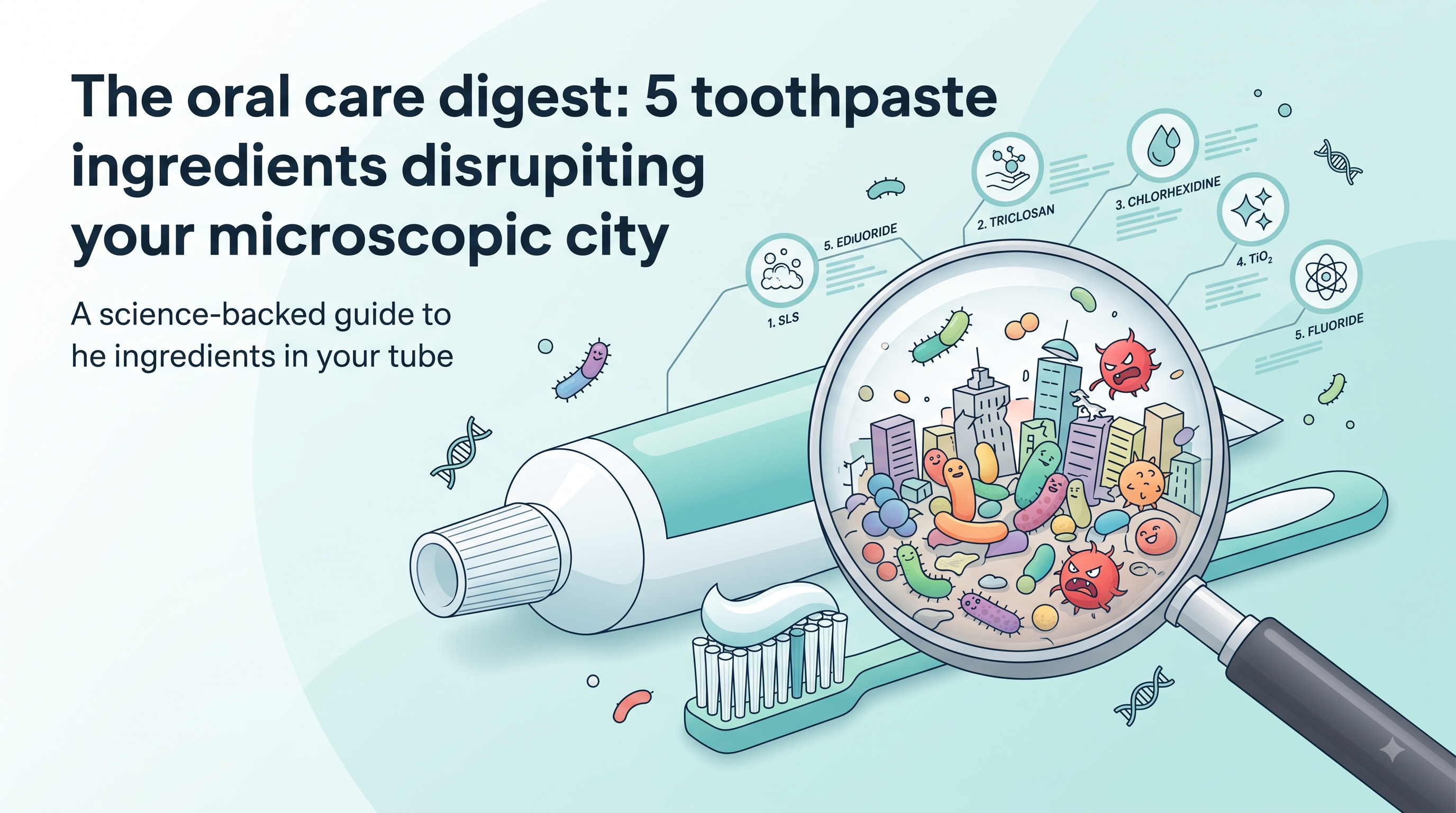
In our previous article, Why Your Teeth Feel Fuzzy, we looked at the fascinating science of the oral microbiome. We found that dental plaque is not merely dirt — it’s a highly organized “microscopic city” of bacteria that, when in balance, actually protects your mouth.
So, if the mouth is a delicate ecosystem, why have we spent the last 50 years treating it like a dirty kitchen floor?
For many years, oral care relied on aggressive methods that focused on eradication with harsh detergents and broad-spectrum antimicrobials. Today, dental science is shifting toward a more constructive approach based on “biocompatibility,” which aims to maintain a healthy oral environment rather than just eliminate bacteria. As research in this area evolves, it’s important to critically assess the supporting evidence for various claims.
Here’s a fact-checked digest of five debated toothpaste ingredients to look for on your next trip down the aisle.
1. Sodium Lauryl Sulfate (SLS): The Harsh Detergent
What it is: SLS is a surfactant, similar to those in dish soap and laundry detergent that creates foam.
The Biofilm Impact: That satisfying foam doesn’t mean the toothpaste is working harder — SLS can strip the protective mucin layer lining the cheeks and gums, which may increase irritation in sensitive people.
The Evidence: Systematic reviews (2019, 2022) found that people with recurrent canker sores (recurrent aphthous stomatitis) who switched to SLS-free toothpaste saw fewer, shorter, and less painful ulcers on average. It’s worth being precise here, though: the reviews themselves describe this evidence as “limited” and call for larger, better-designed trials. Sores are reduced for many people — not “cured” or guaranteed to vanish. If you get canker sores regularly, trying an SLS-free toothpaste for a few weeks is a low-risk experiment worth trying.
2. Triclosan & Chlorhexidine: The “Scorched Earth” Antimicrobials
What they are: Triclosan was once found in regular toothpaste like Colgate Total, while chlorhexidine is a strong antiseptic usually seen in prescription mouthwashes instead of everyday toothpaste.
The Biofilm Impact: These chemicals don’t discriminate between beneficial and harmful bacteria — they suppress the whole community, which may let resistant, opportunistic bacteria take over.
A specific and well-documented effect: Several small clinical studies — and a 2026 meta-analysis — have linked chlorhexidine mouthwash use to a measurable rise in blood pressure. The mechanism: chlorhexidine kills nitrate-reducing oral bacteria that help produce nitric oxide, a molecule that helps regulate blood pressure. This effect is best documented for chlorhexidine rinses used daily over a week or more, not for toothpaste. It’s a good reason to avoid using antiseptic mouthwash as a daily habit unless a dentist has specifically prescribed it.
On triclosan and the FDA: It’s a common misconception that the FDA banned triclosan from toothpaste. In fact, the FDA banned triclosan from antibacterial hand soaps in 2016, but continued to authorize its use in Colgate Total toothpaste, citing evidence of gingivitis benefits — it was the only major triclosan-containing toothpaste on the US market. Colgate voluntarily reformulated the product (as “Colgate Total SF”) in 2019, likely responding to consumer pressure and mounting evidence around triclosan’s links to endocrine disruption and antibiotic resistance, rather than a direct regulatory ban. Today triclosan toothpaste has essentially disappeared from store shelves, even though it’s technically still permitted.
3. Titanium Dioxide (TiO₂): The Cosmetic Whitener
What it is: A pigment used purely to make toothpaste look bright white. It has no dental or medical function.
The Evidence: In 2022, the EU banned TiO₂ (listed as the food additive E171) from food, after EFSA concluded it couldn’t rule out genotoxicity (the potential to damage DNA). This part is often reported accurately.
What often gets left out: TiO₂ is still permitted in toothpaste and cosmetics in the EU. The EU’s cosmetics safety body (SCCS) reviewed the same genotoxicity concerns and, while it couldn’t rule them out for most grades of TiO₂ either, it stopped short of banning it in oral care products — instead calling for more toothpaste-specific research. While caution regarding TiO₂ is reasonable, it isn’t banned anywhere yet. This ingredient is under ongoing scrutiny due to unresolved safety questions, especially for children who tend to swallow more toothpaste than adults.
4. The Fluoride Debate (And the Rise of nHAp)
What it is: Fluoride is the long-established gold standard for remineralizing enamel. It integrates into tooth structure and interferes with the metabolism of acid-producing bacteria.
The Debate: Fluoride is highly effective topically but carries toxicity risks if swallowed in large amounts — which is why tubes carry poison control warnings, particularly relevant for young children.
The Biomimetic Alternative: Nano-hydroxyapatite (nHAp) is the same mineral your teeth are naturally made of. Multiple randomized controlled trials in the last few years — including an 18-month double-blind trial — have found nHAp toothpaste non-inferior to standard fluoride toothpaste for preventing cavities in both children and adults. A 2025 systematic review also supports its ability to remineralize early enamel lesions.
A fair caveat: Fluoride’s evidence base spans roughly 75 years of population-level data; nHAp’s is newer, and many trials rely on surrogate markers (like lesion mineral density) rather than long-term cavity rates. It’s a genuinely promising, fluoride-free option — not yet a proven equal on the same scale of evidence, but a reasonable choice for people who prefer to avoid fluoride.
The Verdict: Modulate, Don’t Eradicate
The era of scrubbing with harsh detergents and blanket antimicrobials is giving way to a more nuanced approach. Avoiding harsh surfactants like SLS (if you’re prone to canker sores), being selective about antiseptic mouthwash, and considering biocompatible alternatives like nano-hydroxyapatite are all reasonable, evidence-informed choices. But it’s worth keeping expectations realistic: most of this research is still developing, effects vary by individual, and “biocompatible” ingredients haven’t replaced fluoride’s long track record — they’re a promising complement or alternative for people who want one.
This article is for general information and isn’t a substitute for advice from a dentist, who can recommend products suited to your specific oral health needs.
Leave a Reply