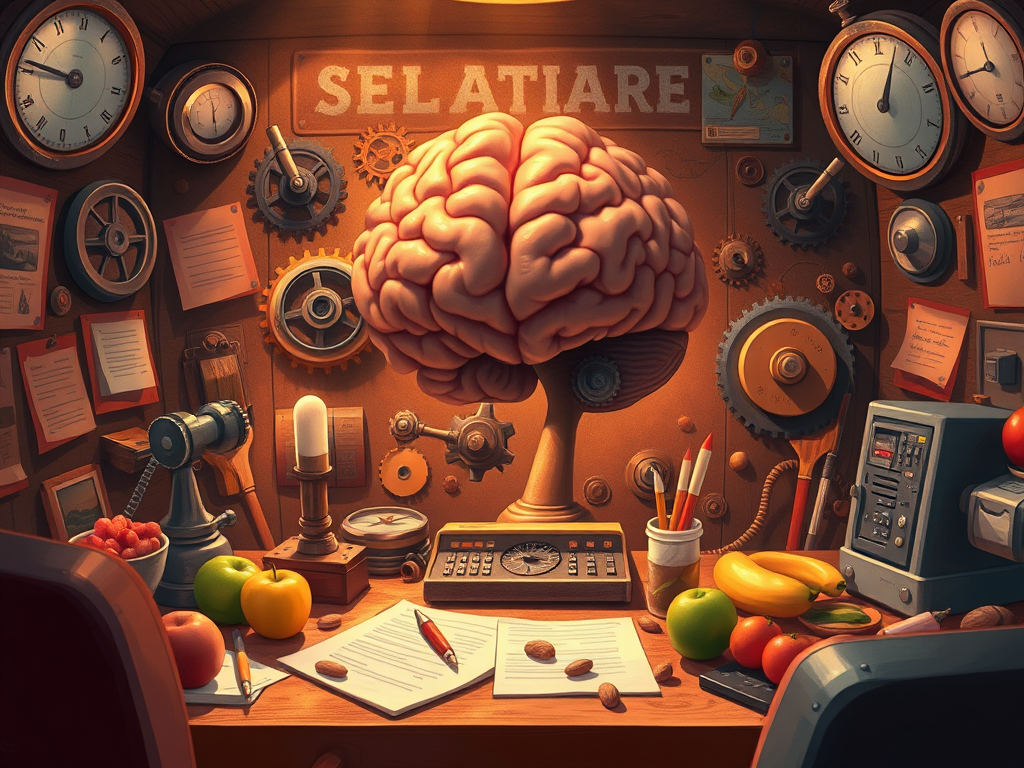
The Brain is a Hungry Engine
Exam preparation requires deliberate planning, effective time management, and a healthy diet. If you have watched the movie Inside Out, you might know what is happening inside your child’s head right now.
Imagine their brain as “Headquarters.” During exam season, anxiety is probably in charge rather than just joy or sadness. She is working quickly, pulling levers, looking through her notes frantically, and making “scenario simulations” of the exam paper.
There is a price for all of this madness at the control console.
Biologically, the brain is a hungry engine. It makes up only 2% of your child’s body weight, but it uses up 20% of their daily energy. During intense studying (or when Anxiety is pushing the buttons), that demand spikes even higher.
The Science: Your Child’s Brain is “Selfish”
You might think I am exaggerating with the movie comparison, but neuroscientists have a term for this phenomenon: The Selfish Brain Theory.
According to research, when your child is under acute stress (like an exam), the brain behaves “selfishly.” It realizes it needs massive amounts of energy to process data, so it triggers a biological blockade. It actively suppresses insulin to stop the muscles and fat from absorbing sugar, keeping all the glucose in the blood stream for itself.
In simple terms: The brain locks the fridge and tells the rest of the body, “Starve if you have to, but I need to eat first.”
This is why students often look physically drained or lose weight during finals, even if they are just sitting in a chair. Their brain is literally draining the body’s resources to keep the “Headquarters” functioning.
The problem? Most students try to power this high-tech headquarters with low-quality fuel: chips, biscuits, and sugary tea. This is like trying to operate a supercomputer on a cheap battery. It works for 20 minutes, and then the system crashes.
As a biotechnologist (and a parent), here is my guide to the “High-Performance Protocol“—the specific nutrients that keep the lights on at headquarters when it matters most.
The High-Performance Protocol:
4 Nutrients to Keep the Lights On
Most parents focus on calories (is he full?), but for academic success, we need to focus on chemistry.
Here are the four non-negotiable nutrients that build the hardware of a learning brain. Learn exactly how to get them into your child’s diet.
- The Wiring Insulation: Omega-3 Fatty Acids (DHA):
The Science: Your child’s brain is 60% fat. The most critical type is DHA (Docosahexaenoic acid), which provides insulation. This enables quicker thinking, better focus, and improved reading skills.- Foods rich in DHA: Fatty fish (Salmon, Mackerel, Sardines).
The Backup: Walnuts, Chia seeds, and Flaxseeds (ALA)
Parent Hack: If they hate fish, try “Fish Cakes” mixed with mashed potatoes, or a high-quality algae-oil supplement.
- Foods rich in DHA: Fatty fish (Salmon, Mackerel, Sardines).
- The Messenger Service: Choline
The Science: Choline is the raw material for Acetylcholine, the neurotransmitter responsible for memory and focus. It is literally the chemical messenger that takes a fact from the blackboard and stamps it into the hard drive.- The Star: Whole Eggs.
The Backup: Cauliflower, Liver, and Soybeans.
Parent Hack: “Brainy Breakfast” = 2 scrambled eggs. It provides nearly half the daily choline requirement for a school-aged child.
- The Star: Whole Eggs.
- The Oxygen Trucks: Iron
The Science: The brain is an energy hog; it uses 20% of the body’s oxygen. Iron is the vehicle (Hemoglobin) that carries that oxygen to the brain cells. Iron deficiency is the cause of fatigue and poor concentration in schoolchildren.- The Star: Red meat, Lentils (Dal), and Spinach.
The Booster: Always pair iron with Vitamin C (lemon juice, oranges, or peppers) to triple the absorption.
Parent Hack: Squeeze lemon over their Dal or Poha. It’s a simple chemistry trick that maximizes fuel delivery.
- The Star: Red meat, Lentils (Dal), and Spinach.
- The Steady Voltage: Complex Carbohydrates
The Science: The brain has no battery backup; it runs exclusively on glucose. But it needs a steady trickle, not a firehouse. Simple sugars cause a spike and a drop, leading to mid-morning irritability. Complex carbs deliver a slow-release energy stream that lasts until lunch.- The Star: Oats, Brown Rice, Quinoa, and Whole Wheat.
The Villain: Sugary cereals and white bread (which act like a power surge that blows a fuse).
Parent Hack: Switch to “Steel-Cut Oats” or add a handful of nuts to their porridge to slow down digestion even further.
- The Star: Oats, Brown Rice, Quinoa, and Whole Wheat.
Summary Box for Parents
The “Exam Morning” Menu
Breakfast: Scrambled Eggs (Choline) + Whole Wheat Toast (Steady Glucose).
Snack: A handful of Walnuts (Omega-3s) + an Orange (Vitamin C to boost Iron).
Lunch: Lentil Soup/Dal (Iron) + Brown Rice (Complex Carb).
The Final Grade: Consistency Over Perfection
As parents, we often worry about finding the right tutors, the best textbooks, and setting screen-time limits. However, the most powerful educational tool we have is right there in our kitchen. Before a child can memorize a math formula or write an essay, their biology must be functioning well. By shifting our focus from merely “filling them up” to “wiring their brain,” we provide them with the essential chemical foundation they need to truly absorb what they learn.
Your Action Plan for Tomorrow Morning: You don’t need to completely overhaul your pantry overnight. In fact, attempting to replace every snack with sardines and spinach might lead to a full-scale rebellion! Start small. Swap sugary cereal for oatmeal just two days a week. Add an extra egg yolk to their breakfast. Squeeze a little lemon over iron-rich dal. The goal isn’t to create a picture-perfect, laboratory-controlled diet. Instead, the aim is to provide consistent biological fuel. Every time you offer DHA, choline, iron, or complex carbohydrates, you are laying another brick in their cognitive foundation. Keep their brain well-fueled, and watch them shine in the classroom.
Ready to start, but dealing with a picky eater? Knowing what to feed your child’s brain is only half the battle. Actually getting them to eat it without a dinnertime meltdown is the real challenge.
That is exactly why I created The Picky Eater’s Brain Food Guide. Inside this free PDF, you will find my top 5 “stealth” recipes designed to hide DHA, Choline, Iron, and Complex Carbs inside the everyday foods your child already loves—no dinner table drama required.
👇 [ CLICK HERE TO DOWNLOAD YOUR FREE GUIDE ] 👇 Keep the lights on at headquarters, effortlessly.

Leave a Reply